
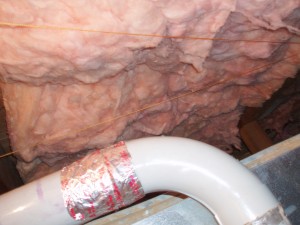
 So…. you’re moving, or getting ready to sell, or in the middle of a home inspection on either end of the transaction. One of the myriad things that may cross your path is the issue of insulation. Some homes have it, some don’t. Some have it in the walls but nowhere else, some have it in the floors and ceilings. A lot depends on the era of the home and whether and how much updating has been done. If you are selling your home and your home has insulation, say underneath, that has been damaged (squirrels, etc), you may be asked to repair or replace it. If you have an older home with blown-in insulation in the attic, you may want to know what the material consists of. If you are buying a home without insulation in the walls, you may be wanting to add some after the purchase is complete. Here are some hopefully helpful tidbits on insulation:
- Insulation is one of the lowest-cost options for improving energy efficiency (saving money : ) You can reduce your heating and cooling needs by up to 30% just by investing a few hundred dollars in insulation and weatherization products.
- Should you insulate your home? Well, only 20% of homes built before 1980 are said to be well insulated, so you may want to investigate whether yours fits into this category.
- How does insulation work? Heat moves naturally from a warmer to a cooler space. So, in winter, it is trying to move to the outdoors through walls, ceilings, floors etc. In the summer, the hot air outside is trying to make it indoors.
- Insulation comes in a variety of forms: in blankets, in batts, bagged & pour-ready, and “blown-in” material.
- An important consideration when choosing a form of insulation is flammability. Keep insulation at least 3 inches from light fixture wiring and other heat-producing equipment unless it is marked “IC” allowing for direct insulation contact.
- Insulation is made of either:
- “Mineral Wool” (which includes rock & fibrous glass). These can be blown-in or purchased in blankets or batts with foil or paper vapor barrier. Rock Wool can also be purchased in bagged form. *This material is inherently non-flammable, but the products that have paper vapor barrier attached may be flammable.
- “Plastic Foam Resin” (made of polystyrene, polyurethane, or urea formaldehyde). It can be purchased in sheets or bolts, or a contractor may spray the foam in place. *These products are generally not ‘Fire-Proof”, but check to find out whether the product you are using is “Flame Retardant”, “Flame Resistant” or neither. Also ask about the ignition temperature… depending on the area in which you live, and other factors, some products, when approaching high ignition temperatures, can emit toxic gases. Additionally, polystyrene and polyurethane cannot be used safely unless enclosed in a flame and heat-resistant material such as gypsum board.
- “Cellulose Insulation” (made of finely ground cellulose such as recycled newspaper). This can be blown in place. *Flame-retardant chemicals are usually added to reduce flammability. One thing to ask about is the type of chemical that may be part of this product as the use, for instance, of too much sulfate can cause potential corrosion of pipes and other metal material.
(NOTE: Bottom line, talk to your contractor or supplier to discuss which type of insulation is right for your home in whatever location and for whatever use you are employing it. This is ONLY meant as a primer to give you a better understanding of your options.)
- The US Dept of Energy (DOE) measures insulation in R-Values, which are different for different areas of the country, and dependent on weather & temperature variations etc. Here is a link that will take you to a map allowing you to find your particular area & check the recommended R-Values: http://www.naima.org/pages/resources/library/pdf/BI487.PDF
- When using fiberglass insulation remember that “looser is better”. Tightly packed fiberglass reduces the R-Value.
- Do not block vents with insulation.
- Use high density insulation such as rigid foam boards on areas such as cathedral ceilings and exterior walls.
- Contrary to popular belief, when installing fiberglass insulation under the flooring in a crawlspace, you attach the paper or foil vapor barrier toward the heated area, not YOU. Secure with rope or wire. Also, remember to insulate piping and ducting if you are opting for insulating under the floor. (NOTE: Consult your contractor or supplier as there are different ways of insulating a crawlspace depending on whether it is vented or un-vented.)
- When installing this fiberglass insulation w/backing in walls under construction you will again face the backing material toward the heated space… so this time it will be facing YOU.
- When insulating walls in already-built homes lacking it, you will again want to consult with a contractor as there are varying opinions about whether to blow in insulation or not. Should you decide to do this, it is generally done through holes punched in the walls from the exterior of the home, and obviously is the material is blowin-in insulation of the kind you and your contractor have agreed-upon.
- It is amazing how much energy can be saved by insulating around doors and windows (Having energy-efficient doors and windows also obviously helps too). Usually you are using a foam insulation here that can be applied directly into any cracks & openings.
- There is a lot of talk about the environmental pluses and minuses of insulating. Obviously saving energy use is good for the planet, AND it can be argued that insulating too much creates an environment where a house cannot breathe, and the potential for toxic buildup inside the home of various substances can exist. Here are several links to more information on this issue so that you can decide for yourself : http://www.utilitybillbusters.com/articles/do-it-yourself-projects/hidden-dangers-of-home-repairs-over-insulating-and-weatherproofing/ , http://www.greenhomebuilding.com/QandA/natural/insulation.htm , http://www.greenfootsteps.com/best-insulation-for-homes.html , http://www.ehow.com/how_5197129_install-fiber-insulation-attic-walls.html
- Here is a link to the DOE’s fact sheet and other helpful information regarding insulation and energy-efficiency: http://www.ornl.gov/sci/roofs+walls/insulation/ins_01.html
I hope this information has proven helpful to you in your individual situation. Obviously this is a large subject, and so maybe we’ll cover some specific issues in the future. Feel free to comment and add your own information, and/or request information directly relating to your needs.
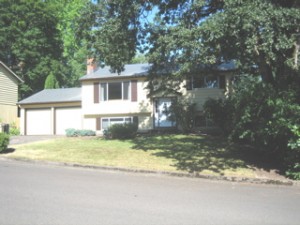 This Sunday there are currently 25 houses scheduled in the RMLS to be held open, including my listing at 13638 SW 62nd in Southwood Park. It’s a big, family home with 4 bedrooms, 3 full baths, and 2 family rooms for just $319,900. Yes, it does need some cosmetic updating, but it has a newer 50 year roof, new windows, and new paint in and out. I’ll be there from noon to 3pm. I’d love to have you stop by. Look for my signs on Westlake Dr and Southwood Dr and follow them in to SW 62nd.
 The last 12 months have been a pretty rough time to be selling a home. Your home may have even been on the market for a period of time longer than you ever thought possible. But now you’ve gotten a good offer that you have accepted. This is a key time in any home sale. You must now get your home to pass the home inspection. I want to give you a list of 10 simple repairs you can do to prepare your home as well as a few things to do on the day of the inspection.
 I was going to write this spectacular post on insulation today… but I am too busy with, well… Real Estate! Nose to the grindstone & all that… but that made me think, Hey! We all need a little time out for laughter, so please accept my modest “jokes” post today. Happy House Adventures to you all! (I’ll tell you all about insulation next time : )
 While today I am posting our regular list of the Lake Oswego Open Houses as advertised in the RMLS, I want to take a moment to discuss open houses in general. Open houses are probably one area in which Realtors really differ on their opinions. I have known agents who absolutely refuse to do them. One man in particular had a sign he took to listing appointments that had the words “Open House” with a big red circle and a diagonal line across the words. He was making it very clear that there was no way he would ever do an open house. I happen to have the exact opposite opinion. I happen to think that they work. Sure, you get the neighbors and the “Lookie Lou’s”, but you also get lots of great exposure to a property that needs to be sold. I think the key is to advertise the open house so that a good percentage of the people who show up are real buyers who know the price and size of the property before they get there. I hold homes open pretty much every Sunday. I believe that on average I sell at least one listing a year off of my open houses. In fact, I sold a house in Lake Oswego about 3 weeks ago as a result of my open house. So I think that open houses do have value.
 Are you wanting to enroll your children in the Lake Oswego School District, but are concerned about finding a home that is large enough, that you can also afford? Look no further. A home that fits this profile has come onto the market.
 Featured Home