Woodstove and Fireplace Inserts

Certification Sticker
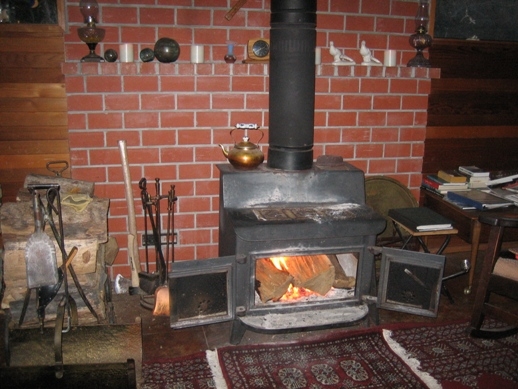
My own woodstove
I am a huge fan of woodstoves and firplaces. My family actually ownes a mountain cabin that is heated with a woodstove. Building a fire is a skill and in my family we challenge each other to build one that is good enough to light with just one match. So woodstoves are near and dear to my heart.

So when the State Legislature passed a law in 2009 that affects woodstoves, I was very interested. This law, known as the Heat Smart for Clean Air Act, went into affect August 1, 2010. It requires the removal of non-certified woodstoves and fireplace inserts upon the sale of a house.

This law does not require the removal if a house is not sold. So you can continue to use and enjoy your non-certified stoves as long as you continue to own your home. It is only upon the sale of the house that they must be removed.

This law also applies to stoves and inserts that are in garages, shops, and out buildings.

Once the stove/insert is removed it can not be sold, given away or re-installed. In fact, it must be destroyed/recycled and evidence of this must be provided to the Oregon DEQ.

How do you know if your stove/insert is certified? There are 3 ways:

1. The Federal DEQ has been certifying stoves since 1992 and a stove sold after that year will have a Federal certification sticker on the stove.
2. The Oregon DEQ has actually been ahead of the Federal government on this and has been certifying stoves since the mid 1980’s. So, again, you’ll find an Oregon DEQ sticker on the stove.
3. A list of certified stoves by brands and models is maintained on line. Click here for that list.

Who’s responsible for removing the woodstove/insert? That is negotiable between the buyer and the seller. Either party can do it, but it has to be completed within 30 days of the sale. And be aware that many lenders would require it’s removal prior to the sale.

Does the woodstove/insert have to be replaced? No. Many older models were quite large. So removing them may benefit the house.

If you do replace it, the models made today are amazing and consist of pellet stoves, wood stoves, and masonry heaters. They are high efficiency with low emmissions. I have a client who heats his house with a pellet stove that he calculates saves him hundreds of dollars each winter.

Finding the certification sticker on your woodstove is easy. It should be on the back of the stove. Finding it on your insert can be tricky as you will have to pull the insert out of the fireplace opening to look for it. Try finding the insert on the approved list first. That could save you the work of pulling the insert out.

If you don’t find your make and model on the approved list, consider inquiring with a chimney sweep or the service department of a hearth product store. For a locator of these sorts of companies, click here.

Can you retrofit an old stove so that it can be certified today? No.

Why did this new law go into affect? The pollution caused by old stoves creates serious negative air quality that causes health problems, especially for older people and young children. It’s estimated that for every old stove removed, the savings in health care costs will be $3900. These old stoves can last decades. This law will speed up the process of removing and replacing these stoves. It is also believed that there are 80,000 uncertified woodstoves and fireplace inserts still in use in Oregon.

In addition, there are both State and Federal tax credits for installing new stoves. My understanding is that Oregon gives a credit of $300 and the Federal government is giving a credit of $1500. Please confirm these figures with your own inquiry or through your tax accountant.

Information for this post was obtained at www.ohpba.org/oregonlaws.htm

Good luck building your own one-match fire!
Dianne

This is Earthquake Country

Earthquake fault
Cascadia Subduction Zone
While not as famous as our neighbor to the South, Oregon is very much earthquake country.

Some background
When recently visiting LO City Hall, I found a wealth of interesting information on a variety of topics, one of which is a handy little magazine called “Living on Shaky Ground“. It’s published by Oregon Emergency Management and is available for free.

We happen to live right on top of the Cascadia Subduction Zone. This zone has a history of 8.0 and 9.0 (we are talking HUGE earthquakes) that goes back 10,000 years with these big quakes happening on average every 250 years. It’s now been 312 years since the last big quake. So it’s not a matter of if, it’s a matter of when.

So, what can you do? In particular, when it comes to your home and buying a house.

When buying a home inspect, inspect, inspect

A good home inspector will look at the house from a perspective of its structural soundness. If the inspector has concerns, he or she should recommend further inspection be done by a seismic engineer.

I was recently involved in the potential sale of a home that was partially built on stilts with a very sloped lot. I was representing the buyer. Our home inspector determined that the substructure of the stilts provided for East and West support (or shaking) but not for North and South. Basically the Nouthern stilts all sat on the same retaining wall with no lateral bracing. In an earthquake, any shaking from the North to the South would cause that retaining wall to fall over and, yep, the house would go down the hill. Needless to say, my buyer chose to end that transaction and ended up purchasing an entirely different home.

If a more in-depth inspection is required by a seismic engineer, expect to spend about $250 for a sight visit. At this visit you will be able to walk the property and get a naration of what the engineer thinks. If you want to proceed and you want specific observation put into writing, that would include corrective measures to create a secur home, expect to spend several thousand dollars.

Consider getting earthquake insurance

There are limitations to what homes can qualify for earthquake insurance. Most insurance companies will not issue it to older homes. But if your home was built in the last 50 or so years, it may be eligible. And if it is, it is not that expensive to add as a rider to your home owner’s policy. Look into it.

Consider getting your home retrofitted

Newer homes are built to modern codes and standards that do take earthquakes into consideration. So newer homes are going to be more seismicly sound. However, older homes can be retro-fitted. Strapping the house to the foundation, installing cripple walls in the crawlspace, bolting the mudsills to the foundations: these are just a few of the possible corrective measures to make an older home more seismicly worthy.

Some thoughts

In 1993, Oregon had 3 strong earthquakes. I was awoken from sleep by the “Springbreak Quake”, a 5.6 magnitude quake centered about 25 miles South of Lake Oswego in Scotts Mills. That same year Klamath Falls in Southern Oregon had 5.9 and 6.0 earthquakes. Being awoken from sleep by an earthquake makes you feel like you have been through something quite extraordinary. I can not even imagine the shock and destruction of experiencing an 8.0 or 9.0 quake.

Preparedness is the key. Do some research, think about preparing your family and your home for living through an earthquake.

I have recently read quite a bit that the way to react to an earthquake is to get into what is called “The Triangle of Life”. This involves laying against furniture or large objects so that your body is contained in the triangle created between the top of the object and the floor. According to the Oregon Emergency Management Office this is NOT the best response. They recommend DROP, COVER, and HOLD ON. Get underneath a sturdy object, on your knees and crouching on the floor, tuck your head between your arms, and hold onto the object that is protecting you. Almost all scientific, government, and relief organizations, including the Red Cross, are now recommending this method.

Let’s hope it doesn’t happen. Proper Prior Planning being one of my favority policies, do take earthquakes seriously. For a copy of “Living on Shaky Ground”, click here.

As always, thanks for reading.
Dianne

Bouncing on the Bottom

I know this is risky. There are all sorts of possibilities that I’ll be wrong and you will be able to come back to me a year from now with “It’s only gotten worse. You were WRONG.” But I am going to take the risk and put this in writing. I think that the housing market is bouncing on the bottom. If there is downturn yet to do then I think it will be minor. And there is even a chance that there will be upturn.
No, I’m not a Nationally recognized economist. Really, what do I know? What I know is that I am down here in the trenches living in this house market. And I see 2 signficant changes.
First, the cash investors are out buying BIG TIME. I am working with 2 cash buyers right now both wanting entry level houses of $150,000 or less. This is partly due to low house prices as compared to high rent rates making the return on rentals look good. But this is the same formula that will turn renters into home buyers. It’s starting to make sense to buy entry level houses because the rents are now getting as high or higher than a house payment.
Second, when I show property I am now finding that more and more houses are going pending. It’s like Christmas is over, the prices and interest rates are incredibly low, so now is the time. Lockbox activity (meaning the number of times lockboxes are opened by Realtors to access listings)has skyrocketed. It always goes up after the holidays, but not like I’ve seen it in the last two weeks.
I am also seeing more positive economic news in the media, including this short article from the Oregoninan on January 10, 2010:

Home values in Portland are predicted to rebound
Portland-area home values fell 3.5 percent during 2011 but are expected to stabilize and even post an increase in 2012, real estate research firm Clear Capital reports.
The California company forecasts a 1.9 percent increase in home values in the Porltand-Vancouver-Beaverton area.
In the company’s ranking of 50 major metro areas’ home prices, that moves Portland from No. 27 in 2011 to No. 14 in 2012. Exactly half of the markets are expected to post home price increases. The Portland market is also among 20 considered to be stable in 2012 with predicted increase or decrease of less than 2.5 percent.
The company also reported 15.5 percent of homes sales in 2011 were bank-owned forcloseures.
U.S. home prices fell 2.1 percent in 2011 and are expected to gain 0.2 percent in 2012, the firm reports.
The Seattle area was one of the hardest-hit markets in 2011, posting a 15.1 percent decline in prices. Clear Capital predicted the city’s real estate would lose 7.5 percent in 2012.

Certainly time will tell. I understand I might be wrong, wrong, wrong. But there is also a pretty good chance that I am right. We will see…
Dianne

The Repair Addendum

There are two major points of negotiations when you are buying or selling a house. The first happens when the offer is made. At this point things like price, closing date, disclosure of financing, and other items are worked out. The second happens about a week later when the buyer has completed any home inspections they wanted and are asking for repairs.

The preferred method by most buyers and sellers is to agree upon a monetary credit at closing from the seller to the buyer for the buyer to do the repairs themselves after closing. This is preferred because it’s super easy for the seller, and for the buyer they then have control over the quality of the work. However, banks don’t like to see money credited to do repairs after closing. What if the buyer never does the repair? So the method to create the credit is to have the credit be applied to the buyer’s closing costs. This allows the repair issue to stay out of the transaction and accomplishes the exact same thing as it leaves money in the buyer’s possession that they otherwise would have spent in the purchase. The buyer can then do whatever they want to with that money after closing. This then creates the limitation that the amount of the credit can not exceed the buyer’s closing costs. So what if the seller has already agreed to pay the buyer’s closing costs? If this is the case, or if the buyer just simply won’t take a credit for the repairs, then the seller is left with the responsibility to do the repairs before closing.

Now comes the part that most buyers and sellers are not aware of. Any repair done in the sale of a home must be done by a licensed and bonded contractor. The seller can not do the repairs themselves. This law went into effect several years ago and applies to all real estate transactions throughout the state of Oregon. The reason makes sense when you think about it. Work done by a properly licensed contractor comes with an automatic 1-year warranty. And the bond that contractors are required to carry guarantees money is available to repair shoddy work if a problem develops and the contractor does not correct it. So buyers, sellers, and Realtors are all protected by using licensed contractors. I can, however, see that this law can become impractical if the work is super minor like replacing a cracked light switch cover, or re-nailing a fence board. I think it makes sense, in light of this law, that these sorts of minor repairs really must be done as normal maintenance on a home long before it is listed for sale. Taking good care of your home while owning it will also get you a higher price when the time comes to sell it.

This law also applies to rental properties. So if you are a landlord, you are not supposed to do the work on your rentals unless you have a contractor’s license.

The home inspection contingency is written in our standardized forms to be an easy out for the buyer. A buyer does not even have to give a reason for disapproving of the property as a result of the home inspection. They can “unconditionally” disapprove. And that’s it. The deal is dead and the buyer gets their earnest money back. So for sellers it’s a pretty anxious time. They know the buyer can back out of the purchase and they also know that they can be asked to do repairs or pay for closing costs. It’s important that this part of the sale be handled properly so that buyers buy a solid home and also so that repairs are done correctly.

Not a very seasonal topic, I know. But important. And probably another good reason to use a Realtor when you buy or sell a house.

Cheers!
Dianne

Celebrating Veterans and VA loans

With Veteran’s Day occurring this Friday, 11/11/11, it seems appropriate to take a moment to look at the benefits that our Veterans have earned as a result of serving our Country.

VA loans are one of the few remaining sources of 100% financing. The veteran still has to qualify their income and their credit. And the amount of the loan can not exceed the appraised value. The seller can pay up to 4% of the sales price towards the Veteran’s closing costs. And the loan can be as much as $417,000. The Veteran’s credit score must be 620 or greater, which is pretty generous as compared to conventional financing which often requires a score of 650 or higher.

The house must also qualify for the loan by being in structurally sound condition. It does not have to be updated or new. It simply has to be in good enough condition to move right in with no broken windows, peeling paint, or that sort of thing.

This loan is available to Veteran’s for the rest of their lives. It can be used over and over again (only one loan at a time, however). So it is not just for the first-time purchase.

Who is eligible? Veterans, active-duty personnel, certain reservists and National Guard members, surviving spouses of persons who die on active duty or die as a result of service-connected disabilities, spouses of active duty personnel who are missing in action, captured in the line of duty, or forcibly detained by a government or power.

How does it work? The VA guarantees to the lender that if the veteran does not pay his loan the lender will be reimbursed. This means that there is no monthly mortgage insurance on this loan. There is what is called a VA Funding Fee that is usually added to the loan amount. This fee is waived if the Veteran or Service Member is disabled in the line of duty.

In addition to the VA loan, there are a couple of other great programs for Veterans. I highly recommend that if you or one of your relatives are a Vet that you visit HOWNW.com, a website devoted to military homeownership resources. There are many, many programs including the Dreammakers Grant which provides 3 to 1 downpayment assistance up to $5000.

If you are looking for a good lender to help you obtain a VA loan, I want to recommend Naida Paris at Northwest Mortgage Group. I have known and worked with Naida my entire real estate career, 24 years. She is probably the most ethical person in the mortgage lending business. And she is an expert about VA loans.

If you are currently on Active Duty, or if someone you know and care about is on Active Duty, I highly recommend you share with them this link. It is a 5 minute video that explains the Service Members Civil Relief Act. This Act requires that Active Duty military can not be charge more than 6% on their debt. That’s right, even on credit cards, they can not be charged more than 6%. It also protects them from eviction or foreclosure.

Why are VA loans so important to me? Well, I’m the Mom of a Marine (wounded in Afghanistan 5/2010), the wife of a Marine, the daughter of a Sailor, the grand daughter of a Soldier, the daughter-in-law of an Airman, the sister-in-law of an Airwoman, the sister-in-law of 4 Marines, and the Aunt of both a Marine and an Airman. Yep, my family is pretty strongly committed to the values of serving our Country.

If you are a Veteran, I would love to help you obtain your next home.
Dianne

Buying A Condo

Condos appeal to buyers for a couple of very specific reasons. First is the appeal of having all of the exterior maintenance taken care of for them. If you travel a lot, are physically unable to do yard work, or simply prefer having someone else take care of things, a condo might be a good fit in your life. The other significant reason people may choose a condo is it is a great first purchase. Condos can often be bought for significantly less than a detached home.

Lake Oswego has a very large assortment of condos. Mountain Park was one of the first planned communities in the U.S. and a big part of that plan was an assortment of condominiums. At the very top of Mountain Park is Oswego Summit with it’s 2 swimming pools and views of Mt. Hood. Then there are the luxury condos that have been built on the Willamette River, on the Lake, and in First Addition. These complexes are located in highly desirable areas and have features such as secured parking and large terraces.

Some quick stats:
There are currently 68 condos for sale in Lake Oswego priced from a low of $43,500 (932 square feet with 2 bedrooms and 1 bath) to a high of $1,895,000 (on the Willamette River with 4784 square feet, 3 bedrooms and 3 1/2 baths).

21 Condos are in escrow with accepted offers waiting to be closed.

54 condos have sold in the last 6 months.

At any given time you’ll find a good selection to choose from.

There are some specific things you need to think about if you are considering a condo purchase. When you make an offer, make sure it is subject to review of these items:

Ask to read the last 12 months of minutes from the Home Owner Association meetings. If there are problems in the complex, people will be talking about them at these meetings. This is probably the easiest way to find out issues.

Make your offer subject to obtaining and approving of financial statements for the HOA (Home Owner’s Association). You want to see that the HOA has been doing maintenance and upkeep. That they have reserves being built up on account for significant repairs such as roof replacement or paving. And you want to see that they are projecting future expenses and not just working on an emergency basis.

Ask the seller for full disclosure of any upcoming special assessments or any litigation that the HOA may be involved in.

When you have your home inspection done, have the inspector walk the complex and inspect it as well. Does he/she see dry rot on decks or worn roofing shingles? If so, find out if the HOA has plans to address correcting these issues.

Buying a condo is different from buying a house. You are buying into a community with shared responsibilities and obligations. You want to make sure the HOA will be a good fit for you and not throw any surprises your way after you move in.

There is a tendency to want to buy a condo with small HOA dues. The HOA dues are paid monthly, in most cases, and cover things like landscape maintenance and repair of the exterior of buildings. Sure, it’s nice to have small monthly expenses. But the problem with small HOA dues is that money is then not collected for future expenses. And when those expenses arise and there is not enough money in reserve, then all of the members of the HOA have to pony up and pay a special assessment. These assessments can be in the thousands of dollars. So do your homework and get to know the HOA before you buy. Don’t necessarily opt to buy a condo just because the HOA dues are small. Small monthly dues can mean big special assessments later.

Please let us know if you have any questions about condos. Linda and I are here to help.
Dianne

Changes in New Construction

Housing starts in new construction have always been a leading indicator of what is happening in the housing market. It can be a real roller coaster for builders. So I thought it would be interesting to compile some information that allows you to easily see what has happened to new construction in Lake Oswego in the years 2006-2011.

Here is a summary:

Year # Houses Sold Low Price High Price Average Price Square feet
2006 30 $449,900 $1,980,000 $1,068,000 3,743
2007 33 $825,000 $2,610,000 $1,435,000 4,450
2008 11 $670,000 $1,815,000 $990,000 3,746
2009 11 $519,000 $2,025,000 $1,002,000 3,623
2010 13 $510,000 $1,115,000 $697,000 3,635
2011 18 to date $375,000 $959,000 $683,000 3,131
2011 Pending 13 $379,900 $1,199,000 $619,800 3,071
Active 39 $379,950 $3,400,000 $662,000 2,924

It’s pretty incredible to see how heady things got in 2007. In just one year the average sales price went up from $1,068,000 to $1,435,000. And the size of the houses being built went from an average of 3743 square feet to 4450 square feet. I remember seeing million dollar mansions being built and sold as spec houses on Southshore! I have always been able to appreciate a big, gorgeous new house at top dollar if it also has a nice location and setting, but on a busy street? Even then it seemed crazy to me. But there is so little undeveloped land in Lake Oswego that the buyers were willing to buy on a busy street. The demand for large, luxury homes was that high.

Then the economy turned. Very few homes were built and sold 2008-2010.

What got me to thinking about writing on this topic is that I have been seeing quite a lot more new construction. The builders have learned and adapted to the economy. I was surprised to see that the average size of a new home is still right around 3000 square feet. So they are smaller, especially when compared to the 4450 average size in 2007, but 3000 square feet is still a good sized house. The big change is in the pricing. Averages prices of 2011 solds, pending sales and active listings are all in the $600,000’s. There are 18 closed sales year to date but 13 in escrow. With escrow times running 45-60 days, it’s fair to say that most of the pending sales will close by the end of the year. So we could potentially see new construction sales up around 30 for the year, which is where they were before the recession.

I think this is a time of opportunity in Lake Oswego housing. There are 13 brand new homes for sale in LO right now that are priced under $500,000.

Please let us know if you want further information. Linda and I would love to be of help.
Dianne

~Make Your Momma Proud~ (or… How To Act in an Open House)

It’s summertime and we’re all kicking off our shoes enjoying the warmer temperatures & the feeling of less restriction overall.  Kids are lounging, we’re eating later & the sun is out… till 9:00!!  I love summertime…  something about the relaxed feeling of everyday life (while we’re not rushing around that is…) is just so pleasing. Reminds me of childhood I suppose, and the absence of school for a few months.

While we’re all a bit more laid-back, there are a few things to remember when you’re out on a Sunday (or Saturday) and touring Open Houses.  I thought it might be helpful to list some do’s & don’ts just for fun:

* You may be encountering a Realtor, or an Owner.  Either way, get out your best manners and make sure to ask if you may entere with shoes.

* If shoes are welcomed, please remember to wipe your feet, and if wearing stiletto heels, take them off anyway as a courtesy. Some wood floors will receive permanent indents from heels… pine, other soft woods, etc… and what a horrible feeling that would be to notice as you look backward!

* When meeting the Owner, remember that this is his or her beloved “home”, and keep any negative comments to yourself.  Leave that kind of delicate conversation to the Realtors.

* When meeting the Listing Agent, make sure to announce if you are already working with your own Realtor.  They will not mind at all, and in fact will appreciate your information greatly (Your Realtor will appreciate it too!).

* Remember not to divulge your innermost secrets to the Agent or Owner.  Your motivations for your own home sale & your subsequent purchase and other personal details are your own business, and sometimes information divulged in this preliminary stage while your Realtor is not there with you can come back to haunt you when you are in the negotiating phase.  You have every right to know all kinds of things pertinent to the home itself, and they have a right to know basically who you are, and that perhaps you might be interested in the home and plan to talk with your agent about another showing with him or her. Alternately, perhaps you think it’s a lovely home but it will just not suit your particular needs., and this is perfectly fine to communicate, and appreciated by Sellers and Agents alike.

* If you have voiced that the home will not work for you (don’t forget to to throw in a compliment or two anyway!) and are asked to share feedback on the home, feel free to do so.  Just remember to be polite.  Good feedback can come in handy for their selling process.

* If you are a neighbor and “just looking”, let this be known as well.  No one will mind at all, and you may want to mention that you are happy to pass information about this great home on to friends of yours whom you might enjoy having nearer to you.

* If you are looking for a home for yourself, bring a notepad and do ask pertinent questions about the home.  If you forget a notepad, utilize a flyer to make notes.  This comes in handy later when you are trying to remember characteristics of various homes.  When you see a lot of homes our brains have a difficult time distinguishing important details without this kind of reference.

* Ask before snapping photos or taking videos.

* Do not bring food or drinks into the home with you, and do not assume that beverages in the refrigerator are there for your consumption.

* Speaking of opening cabinets, closets and refrigerators, this is a really good idea so that you can see how much space there really is for storage. Some bedrooms look as though they have a lot of closet space until you open the doors and find that the closet is a foot deep and doesn’t span all the way from side to side.  The same is true for pantries etc.

* Opening drawers is fine as well, let’s say, in the kitchen… but when in peoples’ bedrooms and personal bathrooms, use your good judgment and do not open drawers and medicine cabinets at all.  Privacy is to be respected, and you do not want to be accused of taking anything such as jewelry or medicines either (this has been known to happen). Most Sellers will remove personal items, but some will not.  Just mind your P’s & Q’s and respect privacy in these areas.  If you decide you want to make an offer on this home, there will be plenty of time to inspect drawers in these areas further down the line.

* Refrain from using the restroom unless it is absolutely necessary.  If it is, remember that people will be following you with the idea of possibly purchasing this home after you exit.  Be kind to the Seller and leave everything tidy & fresh.

* If you are bringing children into the home, be extra vigilant and do not allow them to run through it or play on the couches or take food or drink from the refrigerator.  Treat the experience with the care you would appreciate if it were your home, and keep the environment welcoming for others who are also there & perhaps pondering purchase.

* No pets, please.

I hope these ideas were helpful & good food for thought.

Happy house-hunting!

Linda

PS- I am holding my listing at 979 Devon Lane Open this SATURDAY from 1 4 PM with LIVE MUSIC and hopfully clear skies for views of Mt Hood & Mt Adams!  Come say hi & listen to some great tunes with Michael Mandrell,  Mimy, and Jimmy Free.  I can’t wait!!

Values on the Lake

As a Realtor in Lake Oswego, one of the most common questions I hear is “How much does it cost to buy a house on the Lake?” Now that the lake is full, and the sun is coming out, it seems like a good time to do a little analysis and answer this question.

There are 3 distinct types of water front property: canals, bays, and the main lake. The values are specific for these 3 areas. The canals have more shallow water and houses that face one another from one side of the canal to the other. These properties typically have the lowest values. There are 2 bays, one at each end of the lake, and these bays are shallow, but wide enough for water skiing. The main lake is by far the most valuable. Spectacular is the word that comes to mind. If you can afford it, this is the most beautiful setting.

Canals
There are currently 3 houses for sale on canals. The least expensive is $649,000 and the most expensive is $949,000.

There are 4 canal properties that are pending sales. The least expensive is listed for $749,000 and the most expensive is listed for $1,499,000.

In the last 12 months, 4 canal properties have sold and closed. The least expensive was sold for $510,000 and the most expensive was sold for $845,000.

Bays

There are 5 houses for sale on either of the two bays. The least expensive is listed for $599,000 and the most expensive is listed for $2,300,000.

One house on a bay is a pending sale that was listed for $950,000.

2 houses located on either bay are closed sales from the last 12 months. The least expensive was sold for $625,000 and the most expensive sold for $800,000.

Main Lake

23 houses on the main lake are currently for sale. The least expensive is offered at $924,900 and the most expensive is offered at $15,000,000.

1 house on the main lake is in “bumpable buyer” position. This means that a buyer has made and had an offer accepted that is subject to the sale of their current home. The list price on this house is $1,595,000.

4 houses on the main lake are sale pending. The least expensive was offered at $879,000 and the most expensive was offered at $1,985,000.

11 main lake houses became closed sales in the last twelve months. The least expensvie was sold for $300,000. (Really, an incredible value, probably reflecting land value. It was a short sale that was on the market for nearly a year. I do not know the details of this sale, but logic tells me that there were likely extreme structural or condition issues.) The most expensive was sold for $1,900,000.

Analysis

So to answer the question “What does it cost to buy a home on the Lake?”, with this information I’d suggest it costs about $500,000 to $845,000 to buy a house on a canal; it costs about $625,000 to $800,000 to buy on a bay; and to get on the main lake, you might find a screaming deal for $300,000, but you can go as high as $1,900,000.

Notes

There has not been a closed sale over $2,000,000 in the last 12 months, yet of the 23 houses on the main lake currently for sale, 12 are listed for more than $2,000,000. This tells me that there are 12 home owners who are up against this economy in a very hard way.

The most expensive house for sale on the main lake is Jantzen Island, a 5 acre private estate. It has been in the news of late because the current owner, Jerry Stubblefield who founded Avia Shoes, and Chris Dudley, last year’s Republican candidate for Governor, are involved in a lawsuit over a 3.75 million dollar loan and ownership of Oregon’s most prestigious piece of real estate. The house was built in 1930, it has 13,500 square feet with 4 bedrooms, 6 full baths, and 2 half baths.

There is only one house for sale right now on the main lake that is priced at less than a million dollars. It’s a 1938 Tudor with 2889 square feet, 4 bedrooms, 3 full and 1 half baths, and it is neither a foreclosure or a short sale. If I were in the betting state of mind, I’d predict that this house will go pending long before the $2,300,000 house offered for sale on one of the bays.

I hope you find this information helpful. Give Linda or myself a call if you have any questions,
Dianne

Tips and Tidbits

Your Personal Information – When you are ready to sell and embarking on setting up your listing, you and your Realtor will discuss what (if any) things other than those materially significant to the property may be relayed to an approaching Buyer’s agent. You will likely discuss that you, as the Seller, have confidentiality with your agent unless you specifically direct them to release certain information not material to the property. So, if you are relocating and that is the reason for your move, you may want to ask your agent to go ahead and let agents know (or not). If you are getting married and combining households you may or may not want this shared. If you are really wanting to generate offers and want to let people know that, you -may- want your Realtor to put something like “Motivated Seller” in the remarks… but remember that if you do this, you are letting people know that you will likely accept less than the offer price. The gist is that your personal information is between you and your agent. Sometimes it can be helpful to ask them to share some things if it gives a clear signal that is one that you want to give such as:
* That you are either really motivated, or really relaxed about the sale (depending on your situation),
* That you are in one circumstance or another that may be generally favorable to any Buyer (& therefore that you want communicated),
* That you are putting the home on the market or BOM (back on the market) due to some circumstance not related to the condition of the property, etc.

Then again, you can choose to relay absolutely no personal information at all. Ask your Realtor what he/she thinks. You’re in the driver’s seat.

Inspections
– Talk w/your Realtor about inspections and what is allowed during a transaction. The standard contract pretty much allows for the potential Buyer to inspect the property and systems on the property during their allotted time period (often 10 business days). There is also an inspection addendum that sometimes accompanies an offer detailing more specifically what inspections the Buyer may want to employ, and that has a teensy little addition to be aware of that, if filled in, could allow/tack on a few extra days beyond what is specified in the contract for a Buyer to review of all inspection documents & reports & finish negotiating. Just be aware of this and talk with your Realtor about any affect it might or might not have on your transaction time-line should it come up.

Pricing and Negotiating – These days, in my experience, most people offer less than the asked-for price unless it is a multiple offer situation or there are other extenuating circumstances, so don’t be offended by this if you are selling. It is just a sign of the times. How much you offer as a Buyer, or how you respond to an offer as a Seller are things to discuss in depth with your Realtor. The offer ought to be based on real market value, and of course that is a mixture of recent local market data and what an arms-length Buyer is willing to pay for any particular property. Many Buyers note changing market conditions and their anticipation of market decline when offering significantly less than you are asking as a Seller. Your Realtor will be able to counsel you as a Seller on whether or not these rationale are based on any reasonable conjecture or not with regard to your specific property, it’s location, parameters, and recent local market activity. In the end, you as the Seller hold the cards, as you get to decide to either sell or not to sell given what is presented to you and what the limits of negotiation yield.

Hope this info is helpful!
Very Best,
Linda