

Lakefront property owners in Lake Oswego are pretty comfortable overall with the knowledge that the lake is managed and dammed, and so concerns regarding rising water during heavy rains etc are not prevalent. The lake is owned and managed by the Lake Oswego Corporation (LOC), a local entity to which lakefront residents establish membership and pay dues. Every few years the lake is drained for a few months to allow residents to clean and repair boat docks along the lake and canals, and generally speaking, it is understood that the lake is a controlled body of water. Even so, in the flood of 1996, water did spill over in some areas because it was not able to be released quickly enough at the dam to compensate for the heavy inflow.
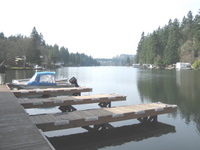
FEMA recently completed a study of the Lake Oswego area and has determined that it will change the flood zone designation for properties on the lake, as well as properties surrounding the canals, Tualatin River, and Spring Creek. The maps for the 100-year flood zone have been altered, and are available for viewing at www.ci.oswego.or.us/plan. The city’s website states: “Text amendments are intended to comply with FEMA’s regulations so that the City can retain eligibility for participation in the National Flood Insurance Program.”
Lake Oswego must be compliant with FEMA’s requirements in order for Lake Oswego residents to be able to take advantage of their flood insurance policies in the event of a natural disaster. Lake Oswego property owners, especially those near the lake, would be well advised to double-check their property’s location on these new maps and its relation to the new flood zones, as they may be required to carry flood insurance now, even though that was not the case when the property was purchased.
 According to Kelley Woodwick at Chicago Title, there is good news for sellers, in that flood insurance contracts may be transferred to new buyers at grandfathered rates and zones. Again, check the city’s new maps before June 18th to acquire information on the grandfathered areas… after the 18th, I am told that the information will most likely be removed from the website.
There are also new regulations resulting, including elevation requirements for remodeling and new construction. Significant remodeling jobs now require that the structure be at 104.5 ft elevation as compared to the old standard of 103.5 ft. New construction after June 18, 2008 will also be required to meet a 104.5 ft elevation requirement.
Checking with the City of Lake Oswego is always a good idea, and much information can be found at their website (above). Stay informed, stay protected, and stay dry!

 The Palisades neighborhood is located on the South side of Lake Oswego, and is roughly the area bounded by: Stafford/McVey along the south & southeast, Southshore Rd. (down to the lake) along the north, Blue Heron, and then north & east of the Westridge Elementary School area.
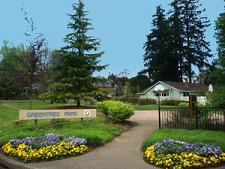 It is a lovely neighborhood with a mix of housing ranging in list price currently from $489,900. to $5,950,000.
 Amenities include the Municipal Golf Course, parks, a dog park, community swimming pool, and the new “boutique” senior living center, “The Stafford”, which is situated across the street from the high school, three athletic fields and yet another dog park. This location, we are told, was intentionally chosen in order to meld the young and the elderly in a real community atmosphere where all phases of life are acknowledged and celebrated.
 One of the best things about Palisades (in my humble opinion) is Palisades Market. This is a locally-owned market with some of the nicest people you’d ever want to meet making sure that you’ve found every little thing.
 There is an adjoining post office annex & the Coffee Nook, a florist, a deli, wine shop, specialty meat shop, bakery and often dinner cooked & ready to be served for take-home by yet another friendly employee… a chef this time. The store is owned by Bob Lamb, Gale Casko, and Nick Goldsmith who is ever-present and always catering to customers’ needs.
 Originally a much smaller store it was located where the pizza parlor, restaurant and cleaners are now, moving in 1997 to its current location just up the block, and boasting 25,000 SF of friendly service.
 On a recent Broker’s Tour in Lake Oswego, my cohorts and I were discussing how important it is to include accurate information in listings, and we noted how easy it is to inadvertently choose the wrong “field” when entering data etc. I thought it might help the prospective home seller or buyer to know a little about how agents search for houses, specifically in using the basic search fields provided to them on the MLS.
 ‘Shady’ Homes…
 ‘Lost in the Woods’ Homes…
 If you have to, take a shot closer-in to the front of the property that actually shows the house, and feature more photos showing the larger area in subsequent photos (you now have the option of including 16 photos on the MLS). In the most difficult cases, short of drastically trimming the trees, another option is to give your agent a photo of the home that has been taken in winter or fall when the trees were bare of leaves so that the house is visible… and attractive to a buyer!
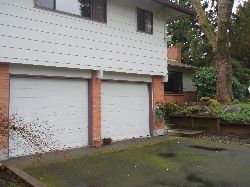 The ‘Star Garage’ Home…
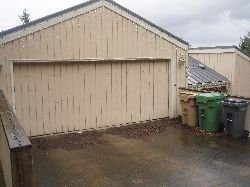 There are ways to shoot these homes that really show off the beauty of their entirety. This usually involves taking the photo from the non-garage-prominent side of the house at an angle.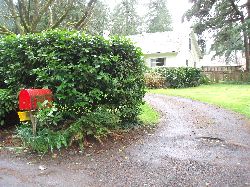


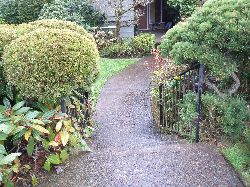
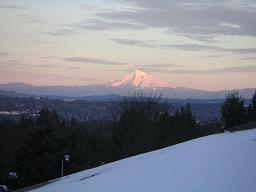 And, last but not least, remember that your Main Photo needs to be of your house on the MLS…

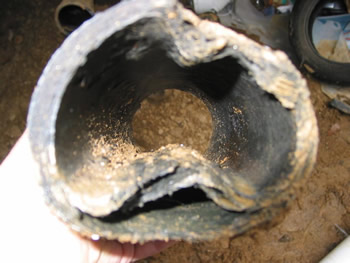 The Fibre Conduit Company of Orangeburg, N.Y. was a major manufacturer of this kind of pipe, and with its widespread use, changed its name to the Orangeburg Pipe Co. — thus the common name of the product. If your home was built during this period, there is a good chance that you have this kind of sewer pipe lurking underground, so it is good to know what this could mean to you as either a homeowner, or someone contemplating a purchase.
 If Lake Oswego is anything, it is a place where quality of life is an essential part of decision-making and planning. People tend to move here to take advantage of the excellent school system, and to become involved in a tightly knit community of individuals who really want to safeguard a set of values that ensures the livability of the community.