
 Though you wouldn’t know it today to look out my window (cloudy & some drizzle), it is summer, sunbeams have been out in force, and temps have been shooting up along with the plants in our yards and gardens. Some of this has to do with the heat, and some has to do with the fact that we are watering things while there is heat. At this time of year, and especially during a recession, we all need a refresher course on watering, and Lake Oswego is only too happy to oblige!
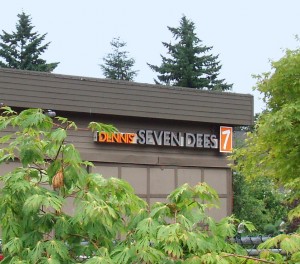 Water conservation experts from the Regional Water Providers Consortium (RWPC) are visiting Lake Oswego for a session with local residents where they plan to hand out free water gauges and lots of good tips for water-efficient landscaping and maintenance. This event will be held this Saturday, June 13th, at Dennis’ 7 Dees Garden Center, 1090 McVey Ave., from 10 AM to 2 PM.
The Consortium has an amazing website that reminds me how much there  is to learn. I remember thinking, when I was much younger and of course knew much more than I do today (or thought I did), that being a native of Southern California (Hey… No ribbing… I’ve been here since 1978!) , I had a very hard time believing that there was truly any need to conserve water in Oregon… I mean come on! With all the rainfall, the huge river running through town, the snowy mountain peaks dribbling water through Portland all year long… How was I supposed to believe that we actually needed to pay much attention at all to water consumption? Well, in recent years we have all learned how integral our activities are to maintaining the living environment we so cherish and want to hand to our children. There really are limits to what nature can provide us in our current numbers & given the constraints of our infrastructure. Then, there is that money thing… Practical tips for saving money while saving water? I’m all ears!
Among the vast array of uselful material to be found at the RWPC site are the following good pieces of information:
- Use Mulch! It is important to know what kind to use however: –Organic Mulches (aged manure, bark chips, wood chips) and compost material will significantly decrease the amount of water you will need for plant health. Specifically, the addition of as little as 5% organic material can quadruple your soil’s ability to store water, decreasing the watering needed. – Inorganic mulches like stones, concrete and gravel can be great for creating landscape patterns etc., but also “re-radiate” the sun’s heat and cause an increase in the amount of water needed to care for surrounding plants.
- Create Watering Zones – These would be areas of your property wherein similar types of plants reside hopefully having similar watering requirements. (Lawn areas, rose garden, annual garden, perennial garden etc) This way you avoid the “one system fits all” mentality and the over-watering that results for some garden areas.
- Adjust Watering Schedules Frequently – As the temperatures shift during the summer, you will want to adjust your watering schedules accordingly.
- Managed Stress in the Landscape – There are all sorts of seemingly complicated formulas to help you determine how much to water a lawn at any given temperature. The RWPC site simplifies this information and helps you understand the “Stressing” concept, which basically means watering as little as possible forcing lawns to use their natural coping mechanisms and give you a green lawn all summer without the heavy over-watering that is so prevalent.
- Water Plants Thoroughly but Infrequently – This causes roots to go deeper and therefore be more drought resistant/require less watering.
- Water When Temps are Cooler – Preferably before 10:00AM or after 6:00PM.
- Use Drip Irrigation Where Possible – Large water droplets close to the ground are much more efficient than sprinkler systems which lose a lot of water to evaporation.
- Don’t Water in the Rain – Use rain sensors and gauges to eliminate unnecessary automatic watering when it is raining.
 When looking for a new home and desiring easy care and potential community amenities such as pool, larger grounds, meeting space etc (without the responsibility of upkeep), most people will consider either a condo or a town home. Most also aren’t necessarily familiar with several relative factors important to the selection process, so I thought I’d highlight just a few for you here.
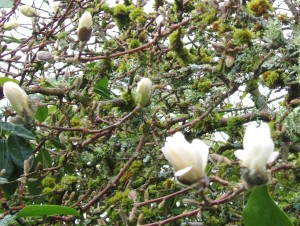 It was a year or so ago, I think, that I wrote a piece on Lake Oswego and its love affair with trees. I included all manner of information on laws in Lake Oswego limiting tree removal etc. This love of trees is a large part of what makes Lake Oswego so beautiful, and so, like the rain, we take the good with the bad and appreciate the end results of being showered with tree legislation.
 Stewardship Event
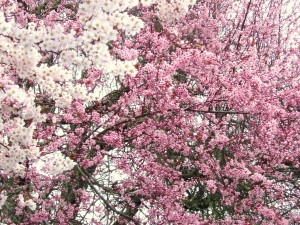 Arbor Art Show Opening
 Located along Lake Oswego’s Northern boundary is
  Bridges are necessary because the park is layed out around a canyon that contains a natural watershed. The creek at the bottom is one of the few remaining creeks in the area with an active run of steelhead trout.
 People locally began to appreciate the value of the natural area and the Friends of Tryon Creek was formed in 1969 to work toward preserving the area in its natural state.
 A discussion about Tryon Creek State Park would not be complete without the subject of the native trillium.
  Lake Oswego is known far & wide for its family-friendly environment and involved citizenry. The schools here are excellent, there are clubs and outlets for all kinds of interests, and of course a myriad of programs for kids of all ages. I wanted to take a moment to highlight a terrific resource called the “McKenzie Lounge for Teens”.
 The McKenzie Lounge is located in the West End Building at 4101 Kruse Way. The Youth Action Council,
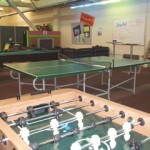 According to the city’s website
 The best thing about the McKenzie Lounge however, is that teens actually report enjoying it! For instance, during the election, the Lounge hosted a series of “Debate ’08” nights featuring the Presidential and Vice Presidential Debates, opportunities for lively discussion, as well as food and extra credits from social studies teachers. The debate series attendance reportedly totaled 115 students, drop-in attendance is reportedly growing by 25% every three months, and teens have been quoted as saying that the McKenzie Lounge ranks right up there with Taco Bell and the video game store as cool hang-out choices.
 A while back Dianne wrote a post on the Realtors Code of Ethics. I loved that post because I don’t think most people are aware of all the standards to which Realtors are held. It really is great to be in a profession where we are mandated to treat each other and the general public with respect. That mandate then becomes a part of our culture. I notice it in the conversations I have with other Realtors. There definitely is a flavor of deliberate respect that is not always the experience for most of us in the day-to-day “non-real estate” wider world of affairs.
 2-Story: Two-level home with main entrance on lower level. (Photo)
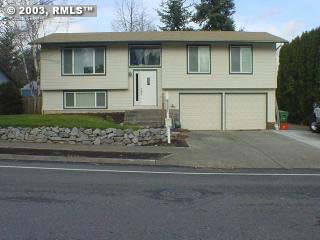 wer level. The entry is not considered a “floor” or story. (Photo)
 with a decorative brace and full front porch. Inside there is usually an array of built-in wood cabinetry, often with glass & leaded glass features. (Photo)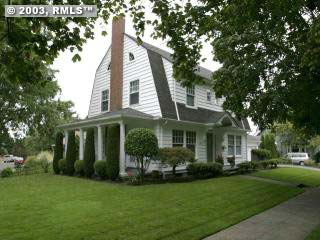
 decorative half-timbering. (Photo)
 Georgian: A formal square box-like structure with a hipped roof, decorative crown or pediment over the front door with columns on each side, and/or cornice mouldings. (Photo)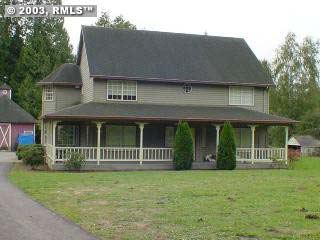
 two to two & 1/2 story with low hipped roof and deep overhang, large central dormer, full porch w/wide stairs. (Photo)
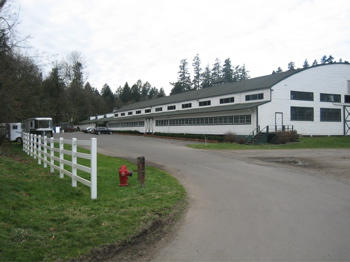 Lake Oswego is home to a very unique and beautiful facility, Lake Oswego Hunt. The Lake Oswego Hunt is an equestrian training program and a riding school for children and adults of all ages. Unlike many facilities that focus on one discipline, Lake Oswego Hunt works with Combined Training, Dressage, and Hunter/Jumper. So if you have a love for horses, and you want to have access to horses in your life, there is a way to do that here in Lake Oswego.
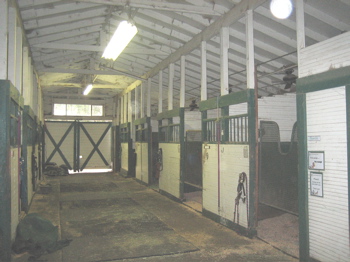 When I stopped in to visit the Lake Oswego Hunt, besides the beautiful arena and barn, I was also struck by the warmth and friendliness of the people that I met. Everyone was gracious and welcoming. I was very taken with the attitude that this is a place that wants to be a part of our community. They made it very clear that they love to have people come in and that they are happy to give you a tour. Along with a calendar of events that includes horse shows and parties, there are occassional open houses that invite the general public to come and see what is happening at Lake Oswego Hunt. The next open house is scheduled for February 7th, from 9am to 5pm.